
Longmen Grottoes: A Timeless Monument of Buddhist Art and Imperial Civilization
Longmen Grottoes is a UNESCO World Heritage Site inscribed in 2000, located on the cliffs along both banks of the Yi River, south of Luoyang City, Henan Province, China. Regarded as one of the Three Greatest Grotto Treasures of China (alongside Mogao Caves and Yungang Grottoes), Longmen represents the highest peak of Chinese stone carving art and a masterpiece of human creative geniusThe People’s Government of Henan Province.
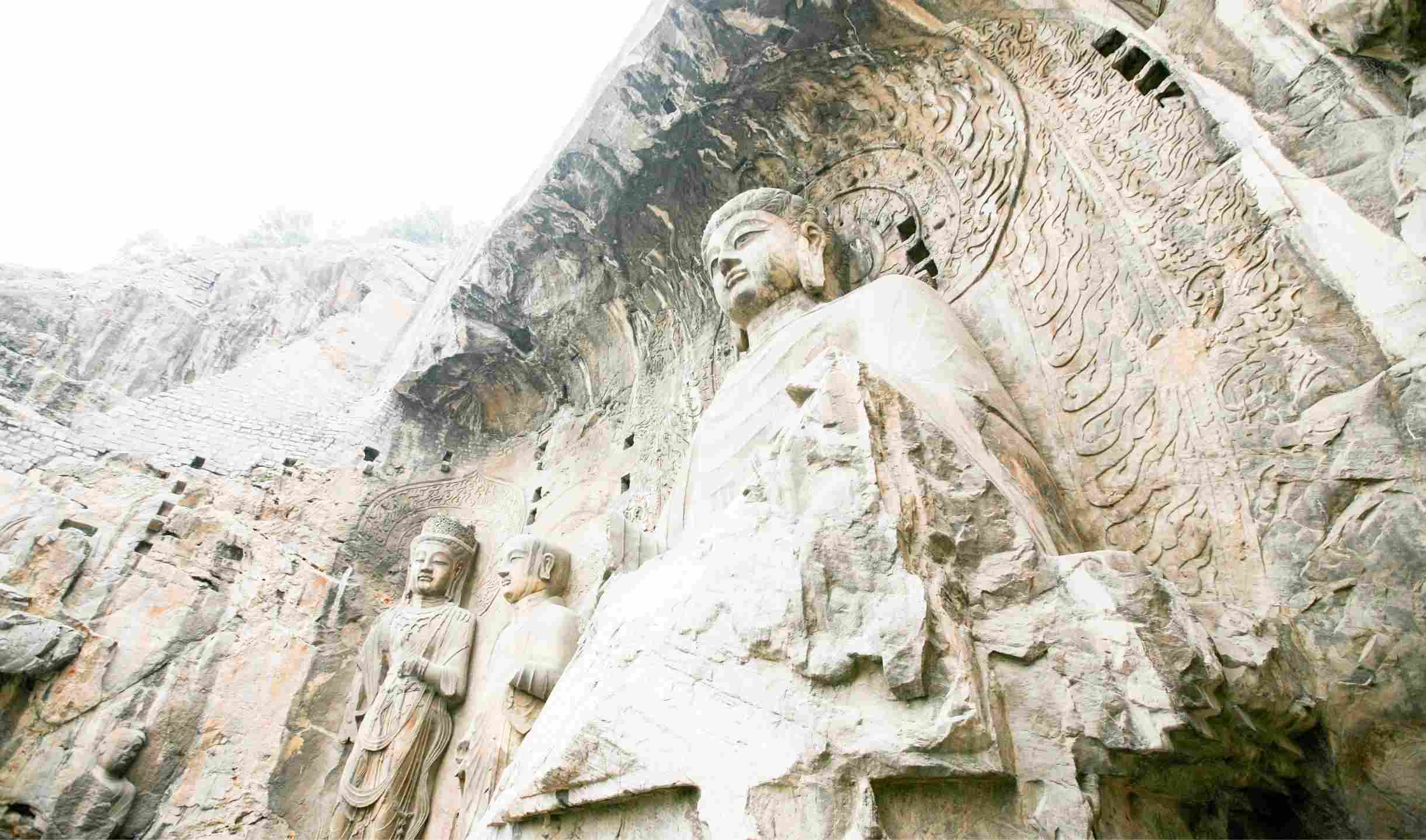
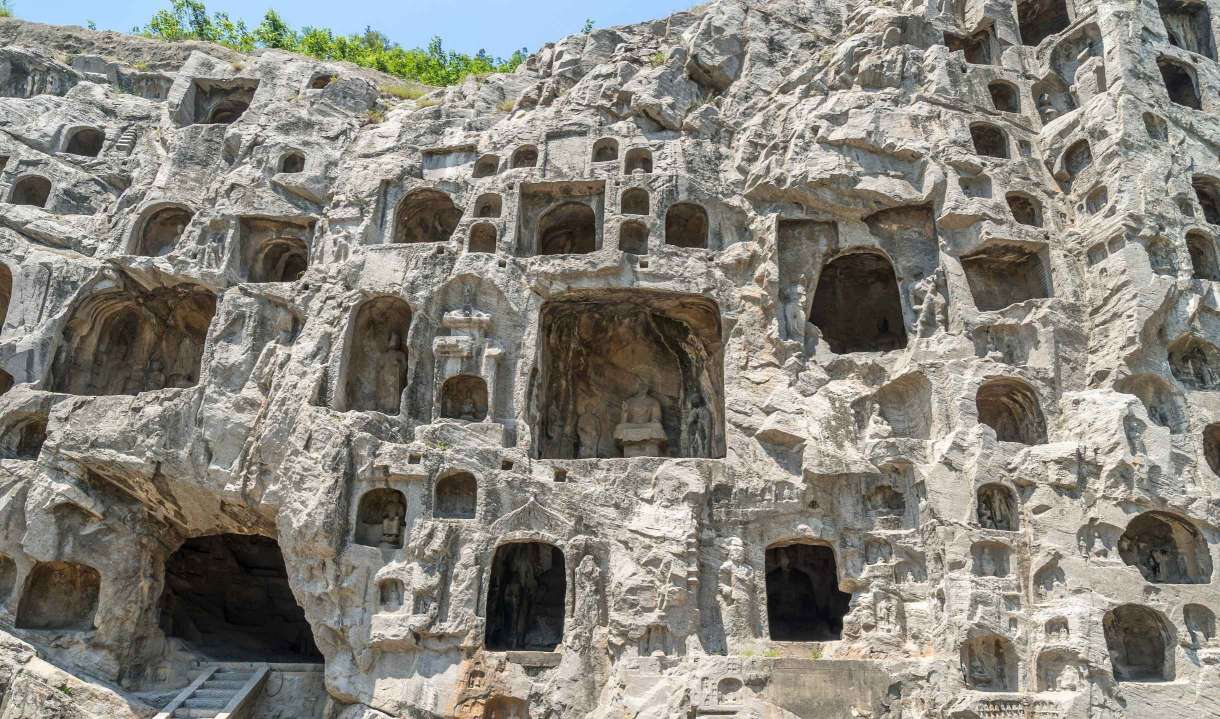
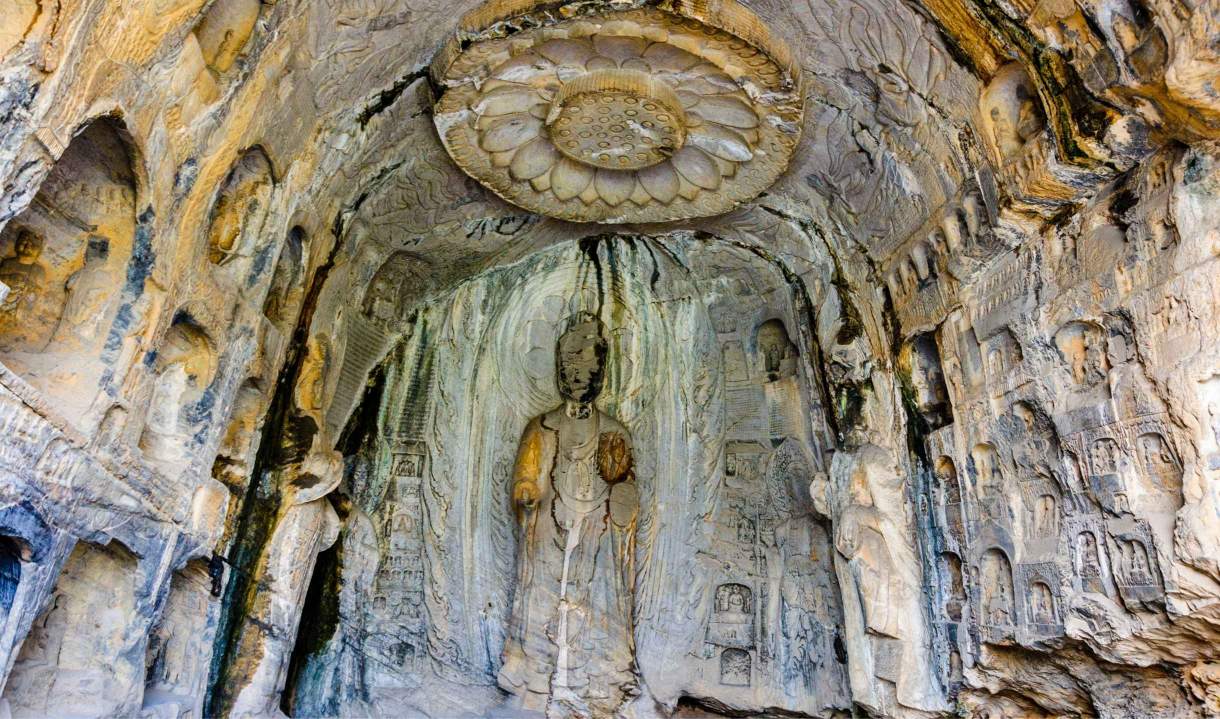
Construction began in 493 AD during the Northern Wei Dynasty and continued for over 400 years through 10 dynasties, reaching its golden age in the Tang Dynasty. Stretching more than 1 kilometer along the river, the site preserves 2,345 caves and niches, over 110,000 Buddhist statues, more than 2,800 stone inscriptions, and nearly 80 pagodasThe People’s Government of Henan Province. Statues range from tiny figures just 2 centimeters tall to the colossal 17.14-meter Vairocana Buddha in Fengxian Temple—the crown jewel of Longmen, carved under the royal patronage of Empress Wu Zetian.
Longmen Grottoes bear witness to two great artistic styles: the elegant, refined Northern Wei style and the magnificent, realistic Great Tang Style. These styles deeply influenced Buddhist art across East Asia, making Longmen a cradle of international cultural exchange.
The cliffs of Longmen are also known as the “Forest of Ancient Stelae”. The inscriptions include the famous Longmen Twenty Pieces, representing the pinnacle of Northern Wei stele calligraphy, as well as masterpieces of regular script from the Tang Dynasty, making it a sacred site for the study of Chinese calligraphy.
What makes Longmen truly exceptional is its perfect fusion of nature, religion, art, politics and imperial power. Carved into the natural limestone cliffs, the grottoes blend harmoniously with mountains, rivers and vegetation. As a royal grotto complex, most caves were sponsored by emperors, nobles and state officials, reflecting the prosperity, ideology and aesthetic taste of ancient Chinese empiresThe State Council Information Office of the People’s Republic of China.
Ecologically and culturally, Longmen Grottoes stand as an irreplaceable treasure. It meets three UNESCO World Heritage criteria:
- Criterion (i): An outstanding manifestation of human artistic creativity.
- Criterion (ii): A perfect art form that profoundly influenced Asian cultural evolution.
- Criterion (iii): A vivid embodiment of the advanced civilization and society of Tang China.
For visitors, Longmen is not only a gallery of stone sculptures but also a journey through 1,500 years of history, faith and art. The towering Buddha statues, delicate carvings, flowing Yi River and green mountains together create a serene, sacred atmosphere that touches the soul. It is a place where stone speaks, history breathes, and Eastern civilization shines eternally.
.jpg)
.jpg)